
AIMIX Concrete Production Solutions for Projects
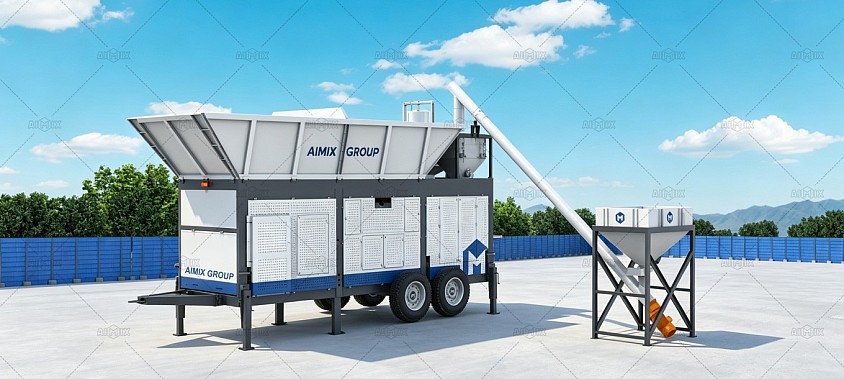
Concrete Pump Batching Plant for Sale in Malaysia: Built for Construction Sites with Limited Space
The Malaysian construction landscape is undergoing a seismic shift. With urban density reaching unprecedented levels, particularly in hotspots like Kuala Lumpur, Johor Bahru, and Penang, the traditional sprawling batching yard is becoming an anachronism. Contractors are increasingly tasked with executing high-rise residential towers, compact commercial podiums, and infrastructure upgrades within severely constrained perimeters. This spatial exigency necessitates a paradigm shift in material logistics. The conventional approach of housing separate batching and pumping units often leads to logistical bottlenecks, material wastage, and exorbitant transportation costs. Consequently, the demand for integrated Pumping Concrete Batching Plant has skyrocketed. These compact, high-efficiency workhorses are not merely equipment; they are strategic assets designed to optimize output per square meter of footprint. For the discerning Malaysian contractor, acquiring the right integrated system is a pivotal decision that directly impacts project timelines and the bottom line. This article elucidates the technical specifications, operational advantages, and market dynamics of these space-saving marvels, providing a comprehensive guide for your next capital investment.
The Spatial Imperative: Why Compact Design Dictates Modern Construction Logistics
Malaysia's city centers are characterized by narrow thoroughfares and minimal staging areas. Transporting a colossal, standard batch plant through these arteries is often logistically prohibitive and frequently requires expensive traffic rerouting permits. Compact concrete pump batching plants are engineered with modular designs that allow for rapid assembly and disassembly, significantly reducing the site footprint requirement. These plants typically feature a vertical material storage arrangement—utilizing skip hoists or low-profile aggregate bins—to maximize capacity without sprawling horizontally. This vertical integration is a game-changer, allowing the entire operation to be nestled into a footprint as small as 80 square meters, compared to the 200+ square meters required by conventional setups. Furthermore, the reduced width facilitates easier transportation via standard flatbed trailers, circumventing the need for oversize load permits that plague the industry.
In a constrained environment, the synergy between the batching unit and the concrete pump is paramount. These integrated plants typically feature a twin-cylinder hydraulic pump system mounted directly beneath or adjacent to the mixer discharge. This proximity minimizes the material drop height and eliminates the need for lengthy conveyor belts, reducing segregation risk and ensuring a homogenous concrete mix. The hydraulic power pack is often optimized for high-pressure pumping, crucial for reaching the upper floors of high-rises where line pressure drops significantly. Look for models with variable displacement pumps that automatically adjust flow rate based on line resistance. This not only prevents line blockages—a costly occurrence in tight sites—but also enhances energy efficiency, reducing diesel or electrical consumption by up to 15%. The control system consolidates both batching and pumping operations into a single, user-friendly PLC interface, mitigating the need for separate operators and freeing up space in the often-cramped site office.
Environmental compliance is non-negotiable in Malaysian urban projects, where the Department of Environment (DOE) enforces stringent particulate matter regulations. Space-limited sites amplify the risk of dust migration to neighboring properties and public areas. Mini concrete batch plant for sale address this through integrated dust collection and suppression systems. High-efficiency pulse-jet bag filters are standard on modern units, capturing dust from the cement silo and aggregate weighing hoppers. Additionally, water misting nozzles are strategically placed at material loading points to agglomerate fines and prevent fugitive emissions. For sites where space precludes the installation of expansive aggregate stockpiles, these plants often feature auxiliary infeed conveyors or wheel loader hoppers with elevated sides to contain material spillage. This holistic approach to material management ensures that the operation remains unobtrusive and compliant, even in densely populated neighborhoods.
Operational Optimization: Maximizing ROI on Your Batching Plant Investment
The linchpin of a profitable project in Malaysia’s competitive construction market is material waste reduction. Compact batching plants are equipped with advanced weighing systems employing load cells with an accuracy of ±0.5% for cement and ±1% for aggregates. The automation software facilitates the storage of up to 200 mix designs, allowing for rapid switches between different concrete grades (e.g., from G20 to G50) without manual recalibration. This precision is critical for ensuring structural integrity and avoiding costly remedial works. Furthermore, the auto-compensation feature adjusts for moisture content in aggregates—a vital capability given Malaysia's high relative humidity—ensuring that the water/cement ratio remains consistent. This level of control not only enhances the quality of the output but also minimizes the margin for human error, reducing the reliance on highly specialized batch men, who are often in short supply.
Time is currency on a construction site, and the "setup-to-strike" cycle of traditional plants is notoriously protracted. The modular, skid-mounted nature of these compact systems allows for a 70% reduction in erection time. Typically, a four-person crew can have the plant operational within 48 hours of delivery. This agility is particularly advantageous for projects with phased construction, where the plant must be relocated internally or to subsequent sites. The quick-connect hydraulic couplings and plug-and-play electrical harnesses minimize the need for extensive on-site welding or fabrication. This lean mobility translates directly into lower overheads for crane rental and labor, thereby enhancing the overall return on investment (ROI) and providing a distinct competitive edge in bid proposals.
Given the high capital expenditure (CAPEX) associated with these sophisticated machines, a strategic decision must be made regarding ownership. For developers embarking on multi-year, large-scale developments (e.g., mixed-use complexes exceeding 5 years), purchasing offers long-term depreciation benefits and asset equity. However, for contractors handling projects with a duration of 18-24 months, the rental market in Malaysia offers compelling alternatives. Many suppliers now offer "Rent-to-Own" schemes or operational lease agreements that include maintenance packages. This shifts the financial burden from CAPEX to OPEX, preserving working capital for other critical inputs. Additionally, rental arrangements often include provisions for technical support and spare parts availability, mitigating downtime risks. It is advisable to project the cubic meter throughput over the project's lifecycle; a purchase is generally justified if the total output exceeds 50,000 cubic meters.
Selecting the Optimal Supplier and After-Sales Support
In a high-stakes operational environment, equipment redundancy is futile without robust support. When evaluating a concrete pump batching plant in Malaysia, the provenance of the supplier is as critical as the machine's specifications. Prioritize suppliers with established service hubs in Malaysia, specifically in Selangor and Johor. The availability of critical wear parts—such as S-tubes, transfer boxes, and delivery cylinders—within a 24-hour lead time is non-negotiable. Inquire about the supplier's inventory management system; do they maintain a physical stock, or are they reliant on overseas shipping? Given the tightening of global supply chains, a local stockholding is a significant risk mitigator. Furthermore, assess the technical proficiency of the service engineers. They should be certified to troubleshoot both the mechanical hydraulic systems and the intricate PLC software.
The Malaysian equatorial climate presents unique challenges: high ambient temperatures, extreme humidity, and frequent tropical downpours. Standard equipment imported from temperate regions often suffers from premature corrosion and cooling inefficiencies. Reputable suppliers offer "tropicalization" packages. This includes enhanced radiator cooling capacity for the hydraulic oil, marine-grade paint coatings for corrosion resistance, and sealed electrical cabinets with IP65 rating to protect against moisture ingress. Additionally, the batching plant's software should be calibrated to handle the dense, high-silica aggregates common in Malaysian quarries. Suppliers should demonstrate a track record of modifying the hopper inclination and agitator speed to facilitate the flow of these specific materials, preventing bridging and segregation.
Operational safety in a compact site is paramount due to the proximity of workers to moving machinery. The selected plant must comply with the Occupational Safety and Health Act (OSHA) 1994 and feature comprehensive safety interlocks. These include emergency stop cords running the length of the platform, overload protection for the weighing system, and safety grating on all elevated walkways. However, hardware alone is insufficient. Insist on a comprehensive operator training program as part of the purchase agreement. This should cover not just the operational workflow, but also emergency shutdown procedures, maintenance schedules, and lockout/tagout (LOTO) protocols. A well-trained operator can preemptively identify anomalous wear patterns or hydraulic pressure fluctuations, preventing catastrophic failures and ensuring the longevity of the asset.
Why Does Concrete Need a Transit Mixer Between Production and Pumping? A New Integrated Concrete Batching Pumping Plant Solution
For decades, the standard concrete construction workflow has remained largely unchanged. Concrete is produced at a concrete batching plant for sale, transferred into a transit mixer for transportation, and finally discharged into a concrete pump before placement. This multi-step process has proven reliable for large infrastructure projects and commercial construction. However, it also introduces additional equipment, labor coordination, fuel consumption, and waiting time. As contractors seek higher productivity and lower operating costs, many are beginning to question whether every step in this traditional workflow is still necessary.
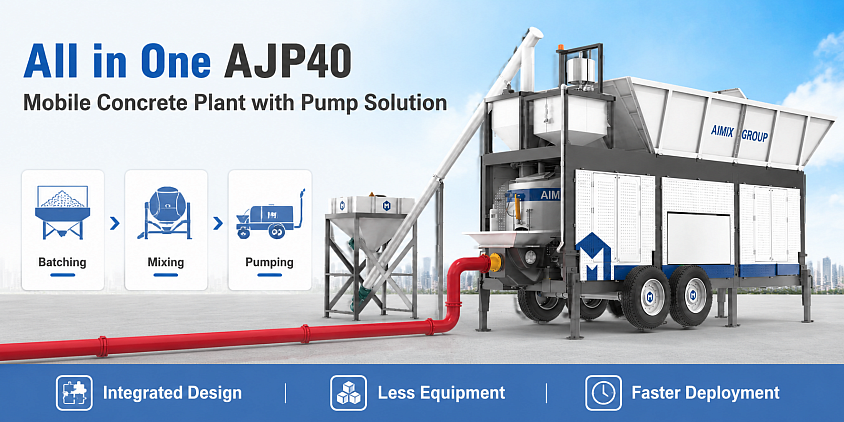
Recent innovations in concrete equipment suggest that the answer is changing. A new integrated concrete batching pumping plant combines batching, mixing, and pumping functions into a single mobile unit, allowing freshly mixed concrete to flow directly into the pumping system without requiring an intermediate transit mixer. This redesigned workflow simplifies concrete production, reduces equipment investment, and provides greater flexibility for projects where efficiency, mobility, and rapid deployment are priorities. Understanding why transit mixers became essential in conventional systems—and why they are no longer required in certain applications—helps contractors choose the most suitable concrete production solution.
Why Traditional Concrete Production Depends on a Transit Mixer
The transit mixer has long been regarded as an indispensable component of the concrete supply chain. Its purpose extends beyond simple transportation. It preserves concrete quality, maintains workability, and bridges the physical distance between the batching plant and the construction site.
Fresh concrete begins hydrating immediately after water contacts cement. During transportation, the drum of a transit mixer rotates continuously to keep aggregates evenly distributed and prevent segregation. Without this constant agitation, coarse aggregates may settle while cement paste separates, resulting in inconsistent concrete quality before pumping even begins.
This transportation method is particularly important when the batching plant is located several kilometers away from the placement area. The transit mixer functions as both a transport vehicle and a mobile mixing chamber, ensuring that concrete remains workable upon arrival.
Another important function of a transit mixer is to decouple batching from pumping operations. Concrete batching plants and concrete line pumps often operate at different production rates. The transit mixer acts as a temporary storage vessel, allowing batching to continue while the pump experiences short interruptions or changes in pouring speed.
This buffering effect improves scheduling flexibility but also introduces another machine into the workflow. Additional drivers, fuel, maintenance, and loading coordination become necessary, increasing overall project costs.
In a traditional configuration, concrete passes through several stages before reaching its final destination:
Raw materials enter the batching plant.
Concrete is discharged into a transit mixer.
The transit mixer transports concrete to the job site.
Concrete is unloaded into the hopper of a concrete pump.
The pump delivers concrete to its final placement location.
Each transfer point introduces potential delays. Equipment may wait for one another, operators must coordinate carefully, and productivity can decrease if any machine experiences downtime. Although this workflow has become standard practice, it is not always the most efficient solution for projects where batching and pumping occur within the same construction area.
How an Integrated Concrete Batching Pumping Plant Eliminates the Transit Mixer
Technological advancements have enabled manufacturers to rethink the traditional concrete production sequence. Instead of separating batching, transportation, and pumping into different machines, an integrated concrete batching pumping plant combines these operations into one coordinated system.
The most significant innovation is the elimination of intermediate concrete transportation. After aggregates, cement, water, and admixtures are accurately weighed and mixed, the finished concrete is transferred directly into the pumping mechanism. There is no need for unloading into a separate transit mixer or waiting for transportation between machines.
This continuous production process reduces handling steps while maintaining fresh concrete quality. Because concrete travels only a short internal distance between the mixer and pump, the risk of segregation and unnecessary material loss is significantly reduced.
Instead of purchasing and coordinating several independent machines, contractors can rely on one integrated platform capable of completing the complete production cycle.
A typical integrated mobile batching plant with pump combines:
Aggregate batching system
Independent weighing system
Concrete mixer
Concrete pumping unit
Centralized control system
Because these components are engineered to operate together, production becomes more synchronized. Material flows continuously from one stage to the next without unnecessary interruptions or manual transfers.
One of the most noticeable operational improvements is workflow continuity. Traditional projects frequently experience waiting periods while transit mixers travel between the batching plant and pouring location. These intervals reduce equipment utilization and increase fuel consumption.
An integrated batching pumping plant minimizes idle time by allowing batching, mixing, and pumping to proceed almost simultaneously. Once production begins, concrete moves through the system in a continuous sequence, improving overall construction efficiency.
When an Integrated Concrete Batching Pumping Plant Becomes the Better Choice
Although transit mixers remain essential for commercial ready-mix delivery over long distances, they are not always necessary for projects where concrete production and placement occur within the same site. In these situations, an integrated batching pumping plant offers distinct operational advantages.
Projects with concentrated work areas often benefit most from an integrated solution. These include residential developments, industrial buildings, rural infrastructure, mining facilities, irrigation systems, and municipal construction projects.
Since concrete is produced directly beside the pumping location, transportation logistics become much simpler. Contractors avoid repeated truck movements while maintaining a steady supply of fresh concrete throughout the construction process.
Eliminating the transit mixer reduces both initial capital expenditure and long-term operating expenses. Contractors no longer need to purchase additional transport vehicles or allocate drivers solely for concrete delivery within the project site.
Maintenance requirements also decrease because fewer machines require servicing, spare parts, lubrication, and periodic inspection. Fuel consumption falls accordingly, contributing to lower operating costs throughout the project lifecycle.
Construction equipment continues evolving toward greater integration and automation. Rather than relying on multiple independent machines connected by transportation stages, modern contractors increasingly prefer systems that consolidate several functions into one coordinated unit.
An integrated concrete batching pumping plant reflects this trend by simplifying the concrete production chain. Operators spend less time coordinating equipment movements and more time maintaining continuous production. The result is a streamlined workflow that supports faster project execution without sacrificing concrete quality.
The Future of Concrete Production Is More Integrated
The transit mixer has played an essential role in concrete construction for decades because traditional batching plants and concrete pumps are physically separated. Its ability to transport fresh concrete while preserving workability remains indispensable for ready-mix delivery across cities and large construction regions.
However, construction methods continue to evolve. When batching, mixing, and pumping can occur within the same project area, transporting concrete between separate machines becomes an unnecessary step. Integrated concrete batching pumping plants eliminate this intermediate process by creating a direct connection between production and placement.
For contractors seeking improved efficiency, reduced equipment investment, and simplified project management, this new workflow represents more than an equipment upgrade. It reflects a fundamental transformation in how concrete is produced and delivered on-site. By combining multiple operations into one intelligent system, integrated batching pumping plants help construction teams achieve continuous production, lower operating costs, and greater flexibility across a wide range of modern building projects.